Sustainability

Sustainability

Sustainability is the ability to maintain or support a process, system, or core resource over a long period of time.

Core Pillars

Environmental

Protecting natural habitats, reducing waste, and using renewable energy sources like solar and wind.

Economic

Creating profitable business models and stable financial growth that do not deplete natural assets.

Social

Ensuring all people have fair access to basic resources, health, and community well-being without exploitation.
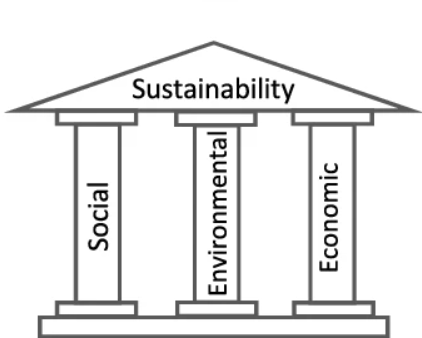
Sustainability supported by three pillars: Social, Environmental and Economic

Everyday Examples

  • Green Transport: Driving electric vehicles, walking, or using local public transit.
  • Responsible Consumption: Avoiding single-use plastics and recycling household goods.
  • Drives Green Innovation: The Restriction of Hazardous Substances (RoHS) forces manufacturers to research safe chemical alternatives, creating cleaner supply chains.
  • Reduces E-Waste Toxicity: Restricting heavy metals like lead, mercury, and cadmium prevents toxic chemicals from leaching into soil and groundwater from landfills.

What is EPR?

  • Definition: An environmental policy approach that makes manufacturers, importers, and brand owners responsible for the entire lifecycle of their products.
  • Core Duty: Companies must handle the collection, recycling, and safe disposal of items after consumers finish using them.
  • Main Goal: It shifts the burden of waste management away from local towns and taxpayers back to the creators of the goods.

Key Areas

E-Waste

  • Managing old electronics and electrical goods.

Plastic Waste

  • Handling packaging and single-use plastics.

Other Goods

  • Covering batteries, tires, and used oil.

EPR

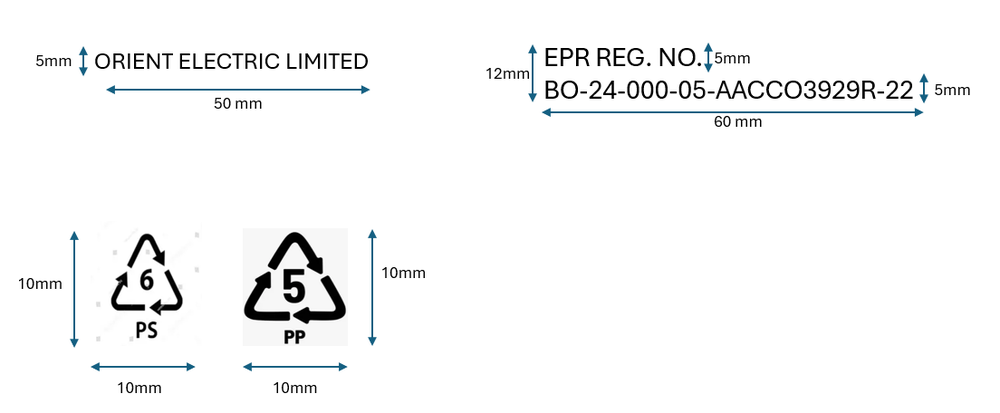
EPR stands for Extended Producer Responsibility. Basically, applied on fan's EPS, PP Strap and Bopp Tape along with EPR & recycle logo addition. Refer below images for tentative sizes of the logos and a reference certificate. Certificate is provided by "Central and / or State Pollution Control Board".

It must be with manufacturer or / and supplier along with their declaration as well.
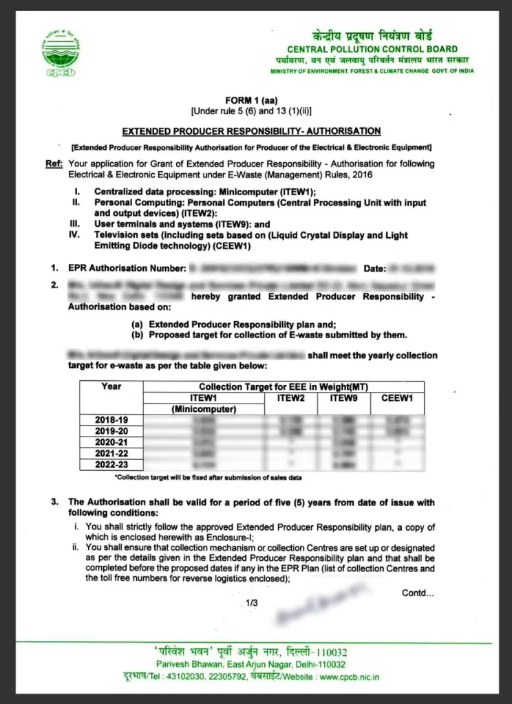
Form 1 (aa) - Extended Producer Responsibility authorisation certificate issued by the Central Pollution Control Board
Tentative sizes for the EPR registration number and recycling logos

RoHS

RoHS stands for the Restriction of Hazardous Substances Directive. It is a European Union regulation created in 2002 that limits the use of ten dangerous materials - such as lead, mercury, and cadmium - in electrical and electronic equipment to protect human health and the environment. [1, 2]

Key Facts About RoHS

  • Main Goal: Stop toxic e-waste from hurting soil, water, and people during use or recycling.
  • Restricted Materials: Limits 10 specific substances including lead, mercury, cadmium, hexavalent chromium, and various plastic softeners (phthalates).
  • Who It Affects: Makers, sellers, and importers of electronic items, large home appliances, computers, and toys.
  • Global Impact: While it started in Europe, many countries now follow these same rules so they can trade electronic parts worldwide.

Ten hazardous materials in electrical and electronic equipment. Maximum permitted levels are capped at 0.1% by weight (except for cadmium, which is limited to 0.01%).

Heavy Metals

  • Lead (Pb)
  • Mercury (Hg)
  • Cadmium (Cd)
  • Hexavalent Chromium (Cr VI)

Flame Retardants

  • Polybrominated Biphenyls (PBB)
  • Polybrominated Diphenyl Ethers (PBDE)

Phthalates (Plasticizers)

  • Bis(2-ethylhexyl) phthalate (DEHP)
  • Butyl benzyl phthalate (BBP)
  • Dibutyl phthalate (DBP)
  • Di-isobutyl phthalate (DIBP)

Normal Practice in Fan Industries:

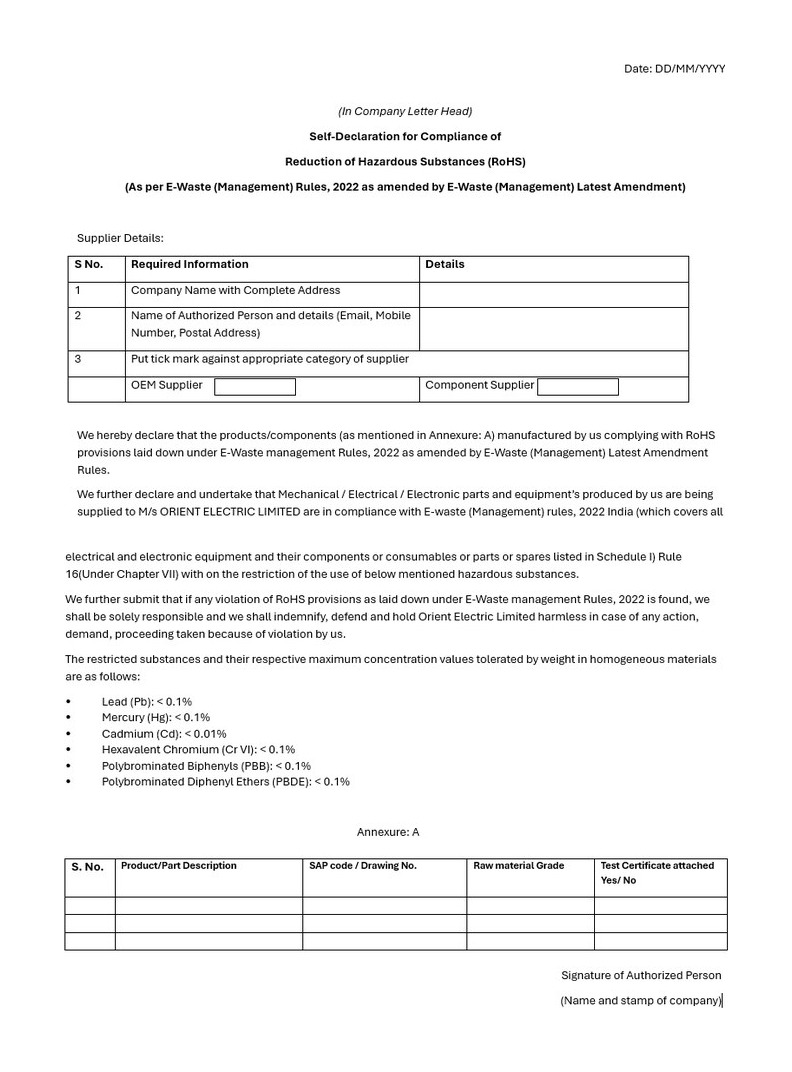
  • Supplier / manufacturer needs to provide Self - declaration (as per attached format) along with at least 1 RoHS test certificate (6 elements as mentioned in Self -declaration format) of the commodity of parts which he is supplying.
  • RoHS test certificate should be from NABL accredited lab only.
  • In self-declaration format, if Part / SAP codes are changing frequently then supplier can put the description of Part (i.e. if multiple canopies are being provided then supplier can mention in part description as "Canopy" thus part codes not required).

Self-declaration form for reference.