Tech Advancement

BLDC Technology

Powering the next generation of ceiling fans

The Indian ceiling fan market is witnessing the biggest shift it has seen in decades. At the core of this transformation are Brushless Direct Current, or BLDC, motors. They are becoming the default choice as a more energy-efficient alternative to traditional ceiling fans.

The numbers make the case on their own. BLDC fans were about 5% of the market in 2020. By 2024 the number grew closer to 15%. Industry estimates predict it will be near 30% by 2027.

Every major fan brand sells a BLDC model now. It is proof that the technology is becoming an increasingly important part of the category.

  • 100% copper motor
  • Runs 2X longer on an inverter
  • Brushless build for a longer life
  • Up to 50% lower electricity bills
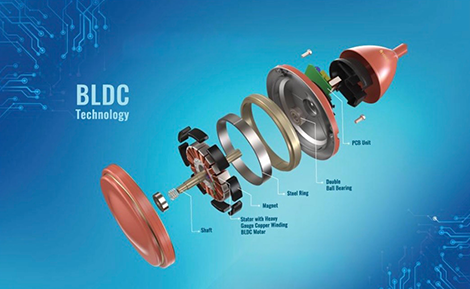
BLDC motor assembly components
Motor assembly
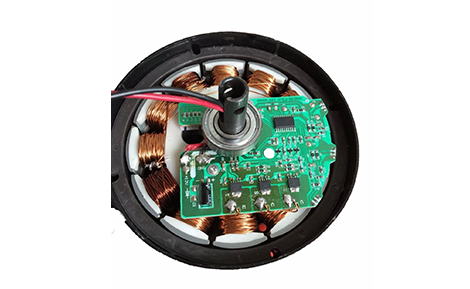
Electronic controller mounted over the copper windings
Controller & windings
Inside the motor

What makes BLDC different?

A BLDC motor combines an electric motor, permanent magnets and an electronic controller. Conventional AC induction motors use brushes to move current through the system, and that friction wastes energy as heat. BLDC motors skip that process entirely. Electronic circuitry sends current straight to the windings, and that's what creates the magnetic field and spins the rotor.

That difference shows up the moment you switch the fan on. BLDC fans use 50%-60% less power than induction motors, with next-to-zero drop in airflow. Speed control is sharper, the fan runs quieter, and performance holds steady even when voltage dips.
Control electronics

Built into the motor, not bolted on

For a household running three or four fans through summer, BLDC fans are a great alternative. Within a year or two of switching over, their efficiency shows up directly on the electricity bill.

The same electronics also enable remote control, different speed settings, timers, boost modes and even IoT features. None of that needs extra hardware. It rides on the control system BLDC already has.

Adoption

From emerging tech to mass adoption

Government policy gave BLDC a push. The Bureau of Energy Efficiency's Star Rating programme for ceiling fans made efficiency a selling point, not just a spec on a box. Rising electricity bills did the rest.

Costs have dropped too, as production has scaled up. Economical BLDC fans mean people can replace old fans before they actually break, purely to cut power use. Design has moved with the tech: sleeker bodies, better blades, smart controls built in rather than bolted on.

BLDC isn't just for the energy-conscious buyer anymore. It's for anyone who wants a fan that performs well, looks good on the ceiling, and doesn't need replacing again in a couple of years.

Fan blades

Better airflow, lower noise

Fan blades used to be flat, metal and pretty much identical from brand to brand. That has now changed. Better aerodynamics and newer materials have given manufacturers real room to design blades that move more air with less noise.

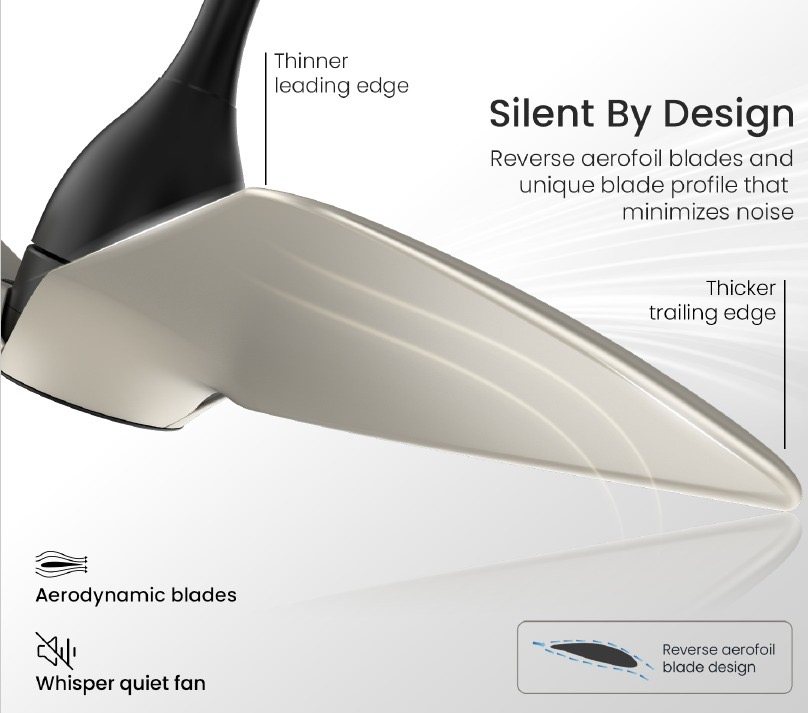
Reverse aerofoil blade profile with a thinner leading edge and thicker trailing edge
Reverse aerofoil profile
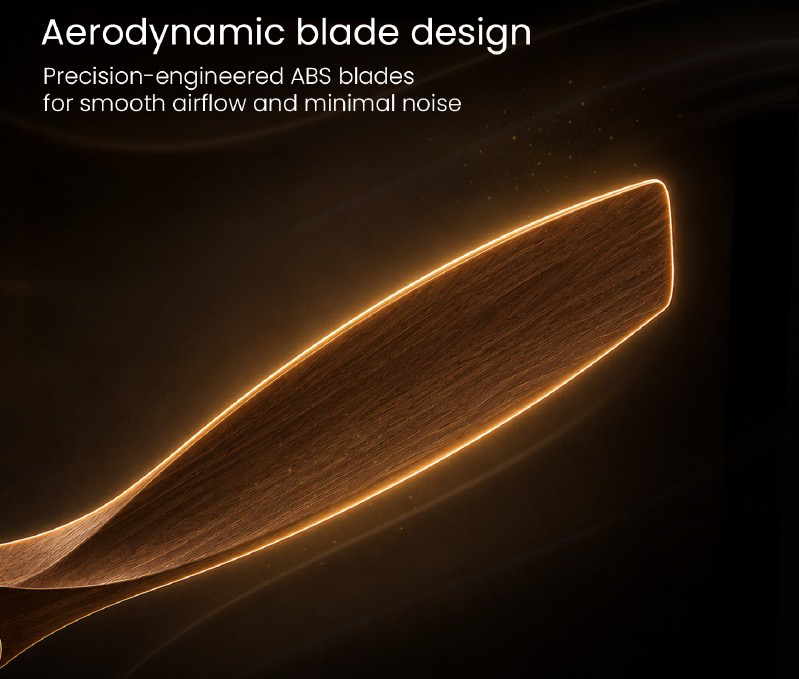
Aerodynamic ABS blade delivering 260 CMM airflow with whisper-quiet running
Aerodynamic blade design
  • ProfileAerofoil blade shape
  • Airflow260 CMM air delivery
  • SoundWhisper-quiet at speed
  • MaterialLightweight ABS build

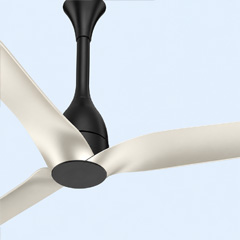
Aerofoil-style blades are the clearest example. Small adjustments to curvature, pitch and profile change how a blade cuts through air. That directly affects both airflow and how much noise the fan makes, even at high speed. Materials like plastics and composites, ABS in particular, opened up shapes that metal blades couldn't manage - lighter, more complex, easier to clean and still strong enough to hold up over years of daily use. Blade engineering isn't an afterthought anymore; it's one of the main levers manufacturers pull to improve how a fan actually performs, not just how it looks on a spec sheet. Design has followed the engineering too. Slimmer blades and sculpted profiles mean fans don't have to look like utility hardware bolted to the ceiling. They can complement the room, whether that's a minimal apartment or a more traditional home.

The end result is a blade that moves air efficiently and stays quiet at higher speeds, without looking like an afterthought.

Design

The changing face of the ceiling fan

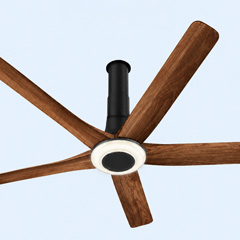
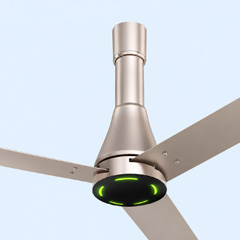
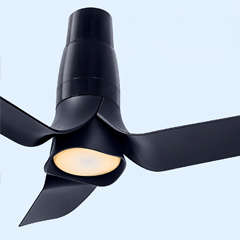
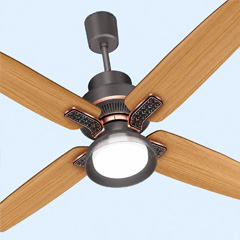
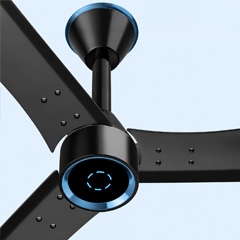
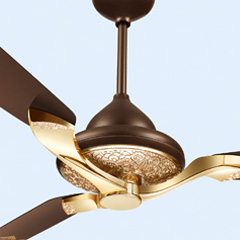
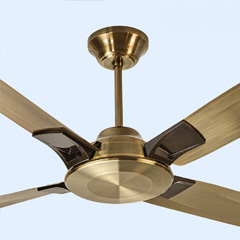
Ceiling fan design used to be pretty standard. Interior trends, new materials and better manufacturing have changed that. The classic shapes are still around, but there's a much wider range of finishes and styles to choose from now. Manufacturers have more room to experiment with proportions, colours and finishes than they used to. Some brands lean minimal. Others go bold and decorative. Both approaches sell well. Compact motors and integrated electronics helped too. When the internal components take up less space, designers get more freedom over the outer look and feel. The bigger shift is in how people think about a ceiling fan. It can complement the visual language of a room, serve as a subtle design element or become a statement piece in its own right.

The result is an expanding category where performance, technology and aesthetics come together.